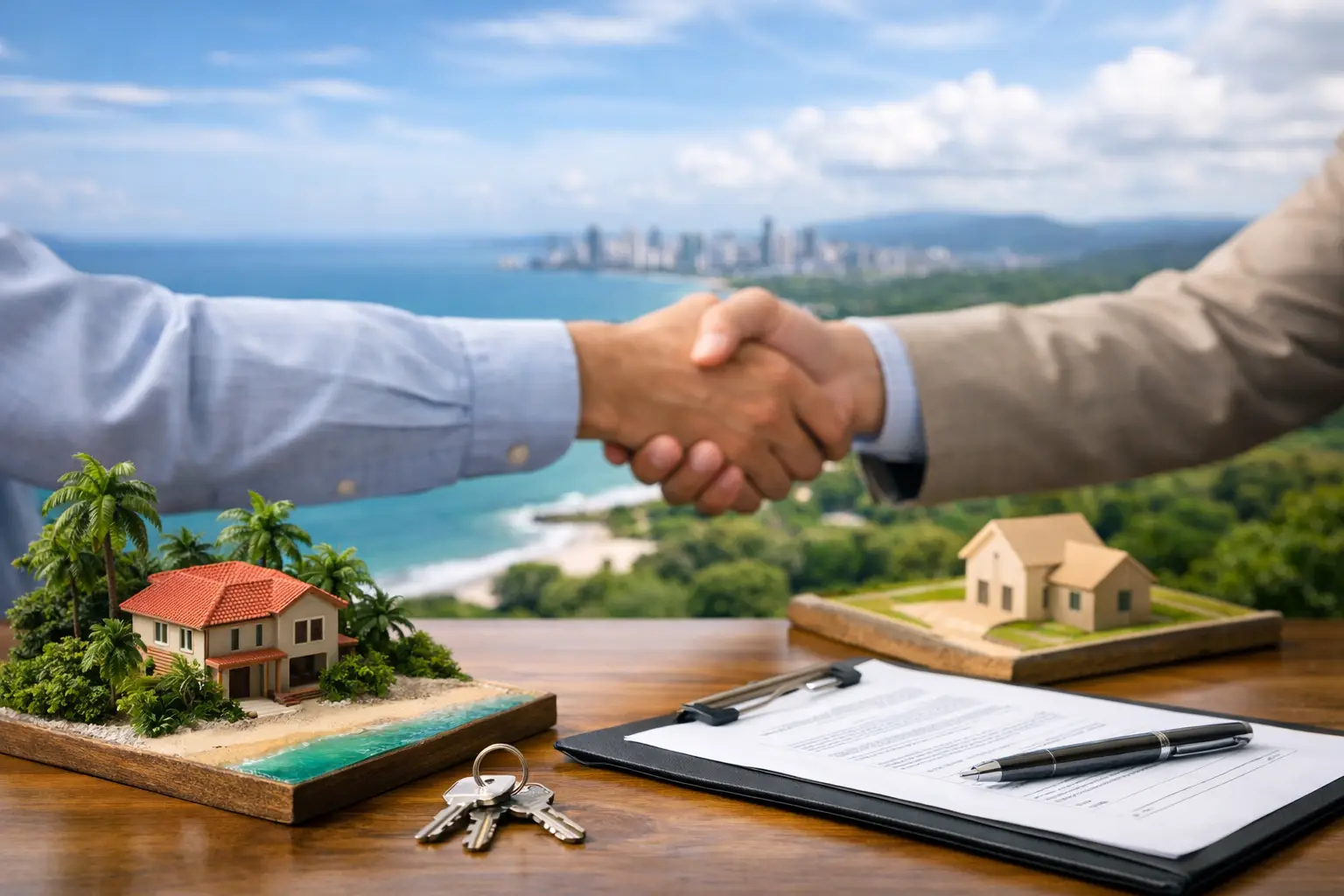
A hillside parcel outside Boquete can look priceless at sunrise. To a qualified buyer, however, its value comes down to facts: title status, road access, water, topography, location, and a price supported by the current market. This guide to selling Panama land is built for owners who want to turn a valuable asset into a well-managed transaction, without leaving critical details to chance.
Land buyers in Chiriquí are often looking for more than acreage. A retiree may want a homesite with a mild climate and reliable utilities. An investor may be evaluating subdivision potential, rental demand, or agricultural use. A developer may be focused on frontage, zoning, and infrastructure costs. Your sale strategy should speak to the buyer your property is actually positioned to attract.
Start With the Land You Can Prove
Before discussing price or photography, assemble the documents and facts that allow a buyer to move forward with confidence. In Panama, the distinction between titled property and rights of possession is fundamental. A titled property has a registered ownership history, while rights of possession can require a very different level of due diligence and may appeal to a narrower group of buyers.
For titled land, confirm that the property details match the information registered in the Public Registry. Review the finca number, legal owner, boundaries, liens, restrictions, and any recorded rights of way. A current cadastral plan and a recent survey are particularly valuable when fences, streams, roads, or neighboring use make boundaries less obvious on the ground.
If the parcel is held through a corporation, prepare the corporate documents as well. Buyers and their attorneys will want to understand who has authority to sell. If an estate, family ownership arrangement, or power of attorney is involved, address that early. These issues do not automatically stop a sale, but surprises late in the process can cost time and negotiating leverage.
Practical property information matters just as much. Document road access, whether the road is public or private, the condition in rainy season, available utilities, water source, elevation, drainage, and cell or internet coverage. For rural land near Tierras Altas, Volcán, or Puerto Armuelles, a buyer may also want details on soil, agricultural history, or access to town services. Do not make assumptions. Verify what you can and describe the rest accurately.
Price Panama Land From Evidence, Not Emotion
Owners naturally remember what they paid, what they invested, or what a neighbor claims to have received. Those details provide context, but they do not establish market value. Land does not trade like a standardized product. Two parcels only a few minutes apart can perform very differently because one has paved access, usable terrain, a clean title, and broad views while the other requires substantial site work.
A strong pricing opinion considers recent comparable land sales, active competing listings, parcel size, location, access, title quality, development potential, and the likely buyer pool. In areas such as Boquete and David, smaller residential-ready lots can attract a different audience than large tracts intended for farming, conservation, or future development.
Be careful with price-per-square-meter comparisons. They are useful only when the properties are genuinely comparable. A large tract generally does not command the same rate as a serviced homesite. Likewise, a dramatic view may add value, but it does not remove the cost of building a driveway, bringing in power, or managing steep terrain.
The best asking price creates interest without signaling distress. If a property receives views but no serious inquiries, the issue may be presentation, missing information, or price. If qualified buyers visit but do not make offers, their feedback deserves attention. A disciplined adjustment is often better than letting a listing become stale.
Prepare the Property for a Serious Buyer
Land should be easy to understand during the first visit. Clear reasonable access points, mark visible boundaries where appropriate, and make sure a buyer can safely see the land’s best features. On a rural parcel, that may mean arranging access with a local caretaker, opening a gate, or planning a showing around weather and road conditions.
Professional visual presentation should show the property honestly. Use photos that establish the setting, approach road, terrain, views, nearby services, and potential building areas. Drone imagery can be especially helpful for larger parcels, but it should clarify the land rather than disguise its limitations. A map, survey reference, and dimensions help international buyers evaluate a property before they travel to Panama.
Good marketing also answers the questions buyers ask before they ask them. Is there electricity at the boundary? What is the water solution? Is the road maintained? What can be built, and what approvals may be needed? Are there streams, easements, protected areas, or seasonal access concerns? Clear answers attract better inquiries and reduce wasted showings.
Market to the Right Buyer, Not Every Buyer
Panama land needs a targeted story. A flat parcel near David with utilities and commercial exposure should be presented differently from a cool-climate homesite in Boquete or an agricultural property near Volcán. The objective is not to use the broadest possible language. It is to connect the property with people who can recognize its value and act on it.
For US-based buyers, clarity is a competitive advantage. They may be unfamiliar with local distances, land measurements, title processes, and regional differences. Explain the practical lifestyle case for the location: proximity to healthcare, shopping, airports, beaches, mountain towns, or border trade routes. Then support that story with accurate property details.
The seller’s responsiveness also matters. Serious buyers frequently want a survey, registry information, utility details, or a follow-up visit before writing an offer. A relationship-driven broker can qualify inquiries, protect your time, and keep momentum moving with buyers, attorneys, surveyors, and notaries. At Nikolai Candanedo, that hands-on coordination is shaped by decades of local market experience and a focus on the full ownership journey.
Negotiate the Terms That Protect the Sale
The highest offer is not always the strongest offer. Look at the proposed deposit, payment schedule, due diligence period, conditions, closing date, and the buyer’s source of funds. A lower offer from a prepared buyer with a realistic timeline may carry less risk than a higher offer filled with open-ended contingencies.
Put the essential terms in writing. The agreement should identify the property precisely, state the price and currency, explain how deposits are handled, outline due diligence expectations, and define what happens if either party does not perform. When a buyer is purchasing through a corporation or from abroad, allow enough time for legal and banking requirements without giving away control of the process.
Avoid informal promises about future access, utility connections, boundary changes, or permitted use. If a commitment affects value, it should be reviewed by the appropriate professionals and documented properly. Land transactions can be straightforward, but only when the expectations are as clear as the boundaries.
Plan the Panama Closing Before You Accept an Offer
Closing is where preparation pays off. Your attorney and notary will help confirm the title chain, certificates, taxes, corporate authority, and transfer documents. If the property has a mortgage, lien, or other encumbrance, establish a plan for resolving it as part of the closing process.
Sellers should also obtain current tax guidance. Panama property transfers can involve transfer tax and capital gains tax obligations, and the applicable treatment may depend on the transaction structure, declared values, ownership history, and other facts. Do not rely on an old rule of thumb or a buyer’s interpretation. A qualified Panamanian attorney and accountant can explain the current requirements before documents are signed.
For foreign sellers, payment logistics require advance thought. Confirm how sale proceeds will be received, what documentation a bank may request, and whether powers of attorney will be needed if you cannot attend closing in person. Proper coordination helps prevent a completed sale from becoming delayed by administrative details.
Give Buyers Confidence Without Overselling
The most effective land sale is built on accurate information, sensible pricing, and steady follow-through. Buyers will accept trade-offs when they understand them. A steep parcel can still be compelling if its views, privacy, and building possibilities justify the site work. A remote tract can be attractive if access and long-term potential are presented realistically.
Your job as a seller is not to make the land sound perfect. It is to make its opportunity clear, document its condition, and give the right buyer a confident path to closing. That is how a Panama land sale earns both a fair price and a successful outcome.

Leave a Reply