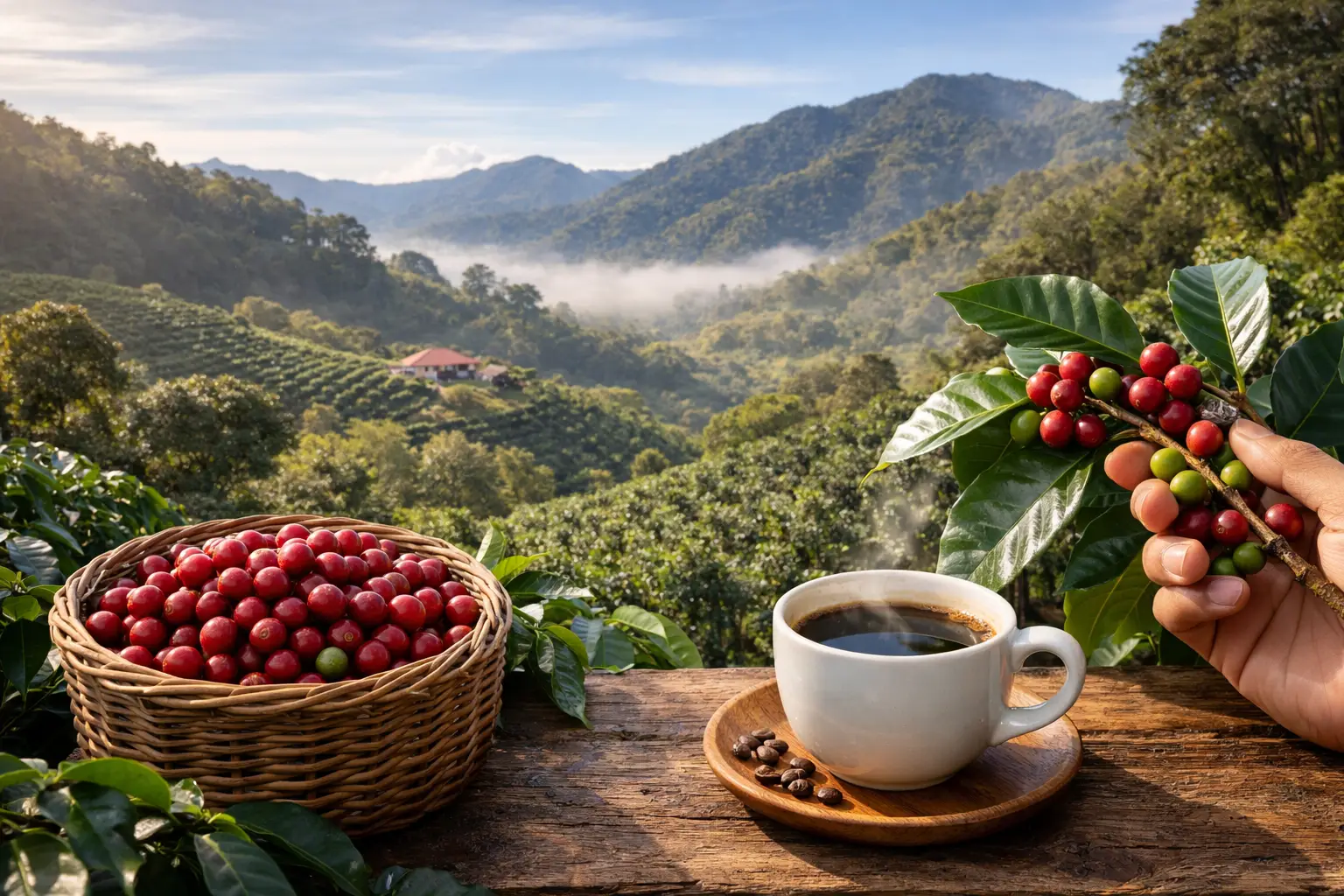
Coffee Farms in Boquete: What Buyers Should Know

Coffee Farms in Boquete: What Buyers Should Know

Few property types in Chiriquí attract as much attention from lifestyle buyers and investors as coffee farms in Boquete. The appeal is easy to understand: premium growing conditions, global name recognition, mountain views, and the possibility of owning land that can serve both as a business and a long-term asset.

That said, buying a coffee property here is not the same as buying a residential home or a simple parcel of land. A productive farm has moving parts. The value is tied not only to acreage, but also to elevation, varietals, water access, labor realities, road conditions, processing options, and how well the farm has been managed over time. If you are evaluating this market seriously, those details matter.

Why Coffee Farms in Boquete Draw Serious Interest

Boquete has built an international reputation around specialty coffee, especially high-elevation production. For many buyers, that creates a rare mix of emotional and financial appeal. You are not just buying scenery. You may be buying into a recognized agricultural region with strong tourism visibility and a premium crop.

From a real estate standpoint, this matters because not all agricultural land carries the same upside. Coffee farms in Boquete often attract buyers who want diversification, land preservation, hospitality potential, or a branded agricultural concept. Some are looking for an operating business. Others want a private estate with a coffee component. Those are very different acquisition goals, and each should shape how the property is evaluated.

What Actually Drives Value

The biggest mistake buyers make is assuming all coffee land in Boquete should be priced the same way. It should not. Elevation is one of the first factors to review because it directly affects the quality potential of the coffee and, in many cases, the marketability of the crop. A farm at one elevation profile can have a very different commercial story than a lower-lying property, even if the size looks attractive on paper.

Access is another major factor. A beautiful farm with poor year-round access can create operational headaches, higher transport costs, and limitations for staff, visitors, or future development. Water is just as critical. Buyers should understand not only whether water is available, but how dependable it is across seasons and whether the farm has the infrastructure to support cultivation, processing, or additional improvements.

Then there is the question of what is already planted. Age of the coffee trees, varietal mix, spacing, shade management, soil condition, and recent production history all affect value. A neglected farm may offer room for upside, but it also brings rehabilitation costs. A well-maintained farm may justify a premium, especially if records support consistent output and quality.

Lifestyle Property or Working Farm?

This is where clarity saves money. Some buyers are drawn to the romance of a coffee property, but what they really want is a mountain estate with income potential. Others want a functioning agricultural business from day one. The land, improvements, and due diligence process should match that objective.

If your goal is lifestyle first, you may prioritize views, privacy, climate, home sites, and proximity to downtown Boquete. In that case, a smaller coffee operation or a mixed-use agricultural property may be a better fit than a large commercial farm. If your goal is production and return, then operational efficiency, labor access, processing logistics, and existing farm systems should take priority over aesthetics.

There is no single right answer here. The right property depends on whether you want to live on the land, lease operations, build a branded hospitality concept, or scale agricultural output.

Key Risks Buyers Should Not Ignore

Coffee properties can be rewarding, but they are not passive by default. Agriculture brings exposure to weather variation, pests, plant disease, labor availability, and fluctuating market conditions. Even in a strong region, one farm can outperform another simply because of management.

Legal and practical due diligence also matters. Boundary verification, water rights or usage patterns, road easements, title condition, zoning considerations, and any existing worker arrangements should be reviewed carefully. Buyers coming from the US often focus first on the opportunity, which is understandable, but the smartest transactions happen when enthusiasm is matched by disciplined local review.

This is especially true if you are buying remotely or planning to hold the property as an investment. In those cases, management structure becomes part of the asset itself. A good farm with weak oversight can quickly become an expensive lesson.

How to Evaluate a Boquete Coffee Property

A serious review should go beyond a showing and a quick walk of the land. Buyers should want to understand the farm’s operational story. What is being produced today? What has been invested recently? What would need improvement in the next one to three years? Are there existing buildings, worker housing, nurseries, or processing facilities that add practical value?

It also helps to look at the property through more than one lens. Agricultural value is one part of the picture, but future land use matters too. Some farms have strong residential, eco-tourism, or estate development potential in addition to coffee production. Others are best viewed strictly as agricultural holdings. Knowing the difference can change the economics of a deal.

For clients looking at coffee farms in Boquete as part of a broader Panama investment strategy, that local interpretation is where experience matters most. A property may look appealing online, but only field-level market knowledge tells you whether it is priced for reality or for emotion.

The Real Opportunity

The best coffee properties in Boquete tend to offer more than one path forward. They can provide a place to live, a working agricultural operation, a legacy asset, or a future development concept with strong regional identity. That flexibility is part of what keeps demand steady.

If you are considering this segment, the goal is not just to find a beautiful farm. It is to find one that fits your timeline, your risk tolerance, and your reason for buying. In a market as specialized as Boquete, the right property is rarely the one with the best photos. It is the one that still makes sense after every practical question has been answered.
Can Foreigners Buy Property in Panama?

Can Foreigners Buy Property in Panama?

A lot of buyers ask this question before they ever book a flight to David or Boquete: can foreigners buy property in Panama? The short answer is yes. In most cases, foreign buyers have the same property ownership rights as Panamanian citizens, which is one reason Panama continues to attract retirees, investors, and families looking for a second home or a long-term move.

That said, the easy answer is not the whole answer. Buying real estate in another country is never just about whether you are allowed to buy. The real question is whether you are buying the right kind of property, with clean title, in the right area, under the right structure for your goals. That is where experience matters.

Can foreigners buy property in Panama with full ownership?

Yes, foreigners can buy titled property in Panama and hold it in their personal name or through a legal entity, depending on the situation. There is no blanket rule that limits foreign ownership of homes, condos, or many types of land. This is one of Panama’s strongest advantages for international buyers compared with other markets where ownership restrictions are much tighter.

But there are important exceptions and practical realities. Not every parcel offered for sale is the same, and not every property right in Panama gives you the same level of security. If you are looking at a condo in Boquete, a house near David, farmland in Tierras Altas, or a coastal opportunity near Puerto Armuelles, the type of property interest matters just as much as the asking price.

In Panama, the safest path for most foreign buyers is titled property with a clear registration history. That means the ownership has been formally recorded and can be verified through proper due diligence. Rights of possession properties do exist, and they can be attractive because of lower pricing, but they involve a different risk profile and should never be approached casually.

The biggest issue is not eligibility – it is due diligence

Many buyers from the US assume the buying process will work just like it does back home. It does not. Panama offers strong ownership rights, but the transaction process depends heavily on title review, municipal records, tax standing, survey confirmation, zoning considerations, and making sure the person selling the property truly has the authority to do so.

This is where some buyers get into trouble. They hear that Panama is foreigner-friendly and stop their research too early. A property can look ideal in photos and still come with unresolved boundary issues, access problems, outstanding obligations, or a mismatch between what is advertised and what is actually registered.

For that reason, experienced local guidance is not a luxury. It is part of protecting the investment. In markets like Chiriqui, local knowledge can make a major difference because neighborhood value, road access, utilities, rainfall patterns, and elevation all affect long-term livability and resale potential.

What kinds of property can foreigners buy in Panama?

Foreigners can buy residential homes, condominiums, lots, agricultural land, and commercial property in much of Panama. The legal ability to own is broad, but what you should buy depends on your purpose.

If you are relocating, a turnkey home in an established area may make more sense than raw land that requires permitting, utility planning, and site preparation. If you are investing, the question becomes cash flow, vacancy risk, management logistics, and whether the market supports the rental strategy you have in mind. If you are buying for future development, then topography, water access, road frontage, and municipal rules deserve close attention early in the process.

This is one reason personalized advisory matters. A beautiful parcel is not always a smart parcel, and a cheap property is not always a good value.

Restricted areas and special cases

Panama is welcoming to foreign buyers, but there are some areas where restrictions can apply, especially near international borders or in certain protected or concession-based zones. These cases are not the norm for a typical homebuyer, but they matter enough that they should be checked before any serious negotiation begins.

Beachfront and island properties also require extra care. Some are fully titled. Others involve concession rights or different use arrangements. Those distinctions affect financing, resale, inheritance planning, and overall security. If a buyer assumes all waterfront property works the same way, that is where expensive mistakes start.

This is why broad statements about buying in Panama can be misleading. Yes, foreigners can buy property in Panama, but the answer depends on exactly what is being bought and where.

Should you buy in your own name or through a corporation?

This depends on your goals. Some foreign buyers purchase in their personal name because it is straightforward and fits a simple lifestyle purchase. Others use a Panamanian corporation or another ownership structure for liability planning, estate considerations, shared ownership, or future investment activity.

There is no one-size-fits-all answer. A retiree buying a primary residence may not need the same structure as an investor acquiring multiple rental units or a developer securing land for a project. The best decision usually comes from looking at the property use, tax implications, long-term ownership plan, and how easy you want eventual resale or transfer to be.

What matters most is that the structure should serve the buyer’s real objective, not just follow a generic recommendation.

Financing is possible, but many foreign buyers use cash

Another common question behind can foreigners buy property in Panama is whether foreigners can finance property here. The answer is sometimes, but financing for non-residents can be more limited than many US buyers expect. Local banks may ask for larger down payments, more documentation, and longer underwriting timelines.

Because of that, many international transactions are cash purchases. That can create negotiating power, but buyers should still plan carefully for closing costs, legal fees, property taxes where applicable, insurance, and any renovation or furnishing budget after closing.

It is also worth thinking beyond the purchase itself. If you will own from abroad, who will check on the property, coordinate repairs, handle tenants, or collect rent if the property becomes income-producing? Buying is only one phase of ownership.

Why Chiriqui gets so much attention from foreign buyers

For many international clients, Chiriqui stands out because it offers variety. Boquete appeals to buyers who want climate, scenery, and a strong expat presence. Tierras Altas attracts those looking for cooler temperatures, agricultural opportunities, or land with a different lifestyle profile. David offers practical convenience, services, healthcare access, and stronger day-to-day infrastructure. Puerto Armuelles can appeal to value-driven buyers watching long-term coastal potential.

These are very different markets, even though they sit within the same region. Price per square meter, resale demand, rental patterns, infrastructure, and buyer profile can shift significantly from one area to another. That is why broad national advice only gets you so far. Local market understanding changes the quality of the decision.

After working in Panama real estate for decades, Nikolai Candanedo has seen one truth repeat itself: foreign buyers do best when they match the property not just to their budget, but to their life plan.

Common mistakes foreign buyers should avoid

The first mistake is assuming every property has clean, transferable title. The second is focusing only on scenery and not on access, utilities, and usable land. The third is underestimating how important a reliable local team is during and after closing.

Another common issue is buying too quickly during a short visit. Panama can feel easygoing, and that is part of its appeal, but a relaxed lifestyle should not lead to a relaxed purchase process. A careful buyer verifies the details before getting emotionally attached.

It is also wise to avoid applying US market assumptions too rigidly. Comparable sales, rental returns, negotiation style, and transaction timing may look different here. Buyers who adjust to the local market tend to make stronger decisions.

So, can foreigners buy property in Panama confidently?

Yes, they can, and many do. Panama remains one of the more accessible real estate markets for foreign buyers, especially for those looking at retirement, relocation, land acquisition, or income property. The opportunity is real.

The confidence part comes from doing it correctly. A safe and successful purchase is not just about finding something attractive online. It is about confirming title, understanding the type of property rights involved, evaluating the local market, and building the right support around the transaction.

If Panama is on your shortlist, treat the purchase like a long-term decision, not a vacation impulse. The right property in the right area can serve you well for years, but the best results usually come to buyers who ask better questions before they sign anything.