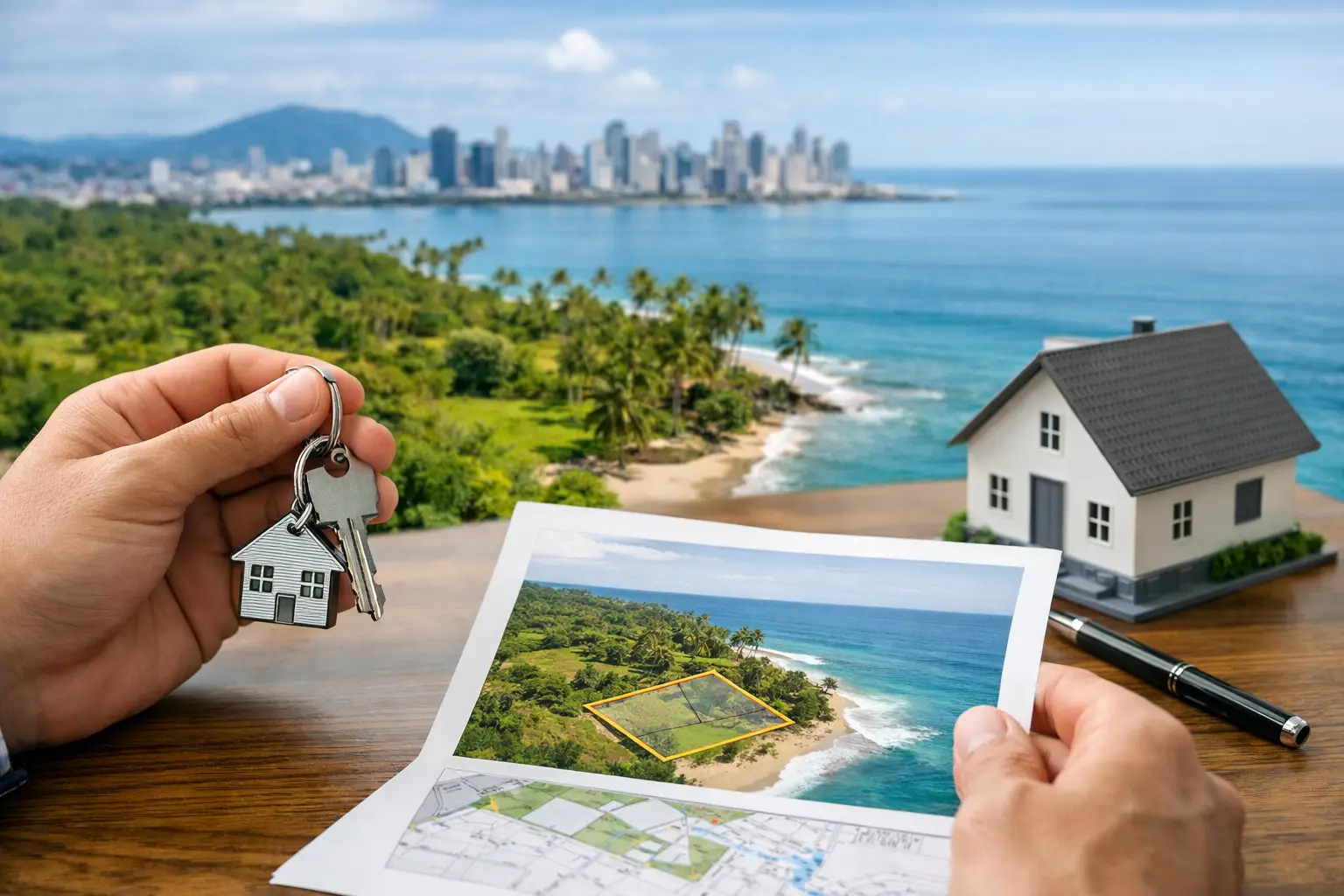
A beautiful view in Boquete, fertile acreage in Tierras Altas, or a coastal parcel near Puerto Armuelles can make a buyer want to move quickly. But the first question should be legal, not scenic: what is titled land Panama? Titled land is property whose ownership rights are formally recorded in Panama’s Public Registry, giving the owner a documented, transferable legal interest in a specific property.
For international buyers especially, this distinction shapes nearly every part of a purchase. A title is not merely paperwork to collect at closing. It is the starting point for confirming who can sell, what is being sold, whether the property carries debts or restrictions, and whether your planned use is realistic.
What Is Titled Land in Panama?
In practical terms, titled land has a registered title deed, commonly called an escritura pública, that identifies the property and its registered owner. The title record is tied to a finca number, which is the property’s unique registration number in Panama’s Public Registry.
When a titled property is sold properly, ownership is transferred through a notarized public deed and registered in the buyer’s name. The Public Registry record is central because Panama generally recognizes registered rights against third parties. A seller’s promise, a private receipt, or a family understanding does not provide the same level of protection as a properly registered title.
That does not mean every titled parcel is automatically ready to buy. A title can still have a mortgage, lien, easement, co-owner issue, boundary discrepancy, or use limitation. Think of title as the legal foundation, not a substitute for due diligence.
Titled Land vs. Rights of Possession
The most common source of confusion for buyers is the difference between titled land and rights of possession, often referred to as derechos posesorios.
Rights of possession may arise when someone has occupied, improved, farmed, or maintained land for years without holding a registered title. These rights can be recognized in certain circumstances and may be bought and sold through private agreements. However, they do not offer the same certainty, transfer process, financing potential, or legal protection as registered titled land.
A possession-rights parcel may be attractively priced because the buyer is accepting more risk. The path to obtaining title, if title is even available, can involve government processes, surveys, proof of possession, boundary questions, and possible competing claims. It can take time, and there is no responsible professional who should promise that a title will be issued by a particular date.
For a retiree building a primary residence, an investor planning rental units, or a developer creating a project, titled land is usually the stronger starting point. Rights of possession can have a place in a carefully evaluated strategy, but they require a much higher tolerance for uncertainty and specialized legal review.
What a Panama Title Review Should Confirm
Before making a meaningful commitment, the title record should be examined by a qualified Panama real estate attorney. A good review goes beyond matching the seller’s name to the listing.
First, confirm the finca number, current registered owner, legal description, and property size. This verifies that the parcel being marketed is the same parcel reflected in the registry. In rural Chiriquí, where properties may have been divided, inherited, or described by local landmarks over many years, this step is especially valuable.
Second, check for registered encumbrances. These can include mortgages, liens, cautions, usufruct rights, easements, and restrictions. Some encumbrances are routine and can be cleared at closing. Others may affect access, construction plans, or the value of the property. The key is to identify them before funds are released.
Third, confirm the seller’s authority to transfer the property. If the owner is a corporation, the company’s legal status and signing authority must be verified. If the property is part of an estate, held by multiple family members, or subject to a power of attorney, the transfer documents deserve added attention.
Finally, review the practical facts on the ground. A clean registry record is essential, but it does not show whether a neighbor’s fence sits across the boundary, whether the access road is dependable in the rainy season, or whether water and electricity are available at a reasonable cost.
Why Surveys and Access Matter in Chiriquí
A registered title describes legal ownership. A current survey helps show where that ownership begins and ends.
This matters in Boquete, Tierras Altas, David, and other growing areas of Chiriquí, where a property’s terrain can vary sharply from one section to another. A listing may describe a parcel as having river frontage, mountain views, road access, or buildable land. A survey and site visit help determine whether those features fall within the actual boundaries and whether the land supports your plans.
Access deserves equal attention. Land can be titled yet rely on an informal route across another person’s property. If there is no documented legal access, future construction, resale, and lender requirements may become more complicated. Ask how the property is reached, who maintains the road, and whether an access easement is recorded when needed.
For larger acreage, it is also wise to understand whether the land has been legally subdivided and whether future subdivision is permitted. Investors sometimes assume that a large titled finca can be split into smaller lots immediately. That depends on planning rules, survey requirements, infrastructure, road frontage, and municipal approvals.
Titled Does Not Mean Free of Costs or Limits
Buyers should expect ongoing obligations. Property taxes, municipal considerations, homeowner association fees where applicable, and maintenance expenses remain part of ownership. If there is an existing home, review permits, improvements, utility accounts, and any rental arrangements separately from the land title.
Land use also requires a realistic view. Agricultural land, residential parcels, commercial locations, and environmentally sensitive areas may have different requirements. Proximity to a river, coastline, protected area, or public road can affect what may be built and which approvals are needed.
Foreign buyers can generally own titled property in Panama, including through a personal name or a legal entity, subject to applicable restrictions and professional advice. The ownership structure should fit the buyer’s goals, estate planning considerations, future sale plans, and operating needs. There is no one structure that is right for every buyer.
A Safer Way to Buy Titled Property
A disciplined transaction begins before an offer is finalized. The property should be identified precisely, the title and seller reviewed, and the commercial terms written clearly. Your offer or purchase agreement should address the purchase price, deposit handling, due diligence period, closing conditions, and responsibility for taxes and closing costs.
Avoid sending significant funds directly to an unknown seller simply because the property appears to have a title. A properly structured closing coordinates the legal transfer, payment process, tax obligations, and registration. The buyer should receive confirmation that the deed has been presented for registration and later confirm the completed registration in the buyer’s name.
For remote buyers, local representation adds practical value beyond the documents. A trusted advisor can compare the registry record with the property being shown, coordinate inspections, identify local questions worth asking, and help you avoid treating a promising listing as a finished answer.
Nikolai Candanedo brings long-standing Chiriquí market knowledge to buyers evaluating homes, land, and investment opportunities. The goal is not to rush a decision. It is to help clients understand what they are buying, what could affect it, and how the property fits their long-term plans.
Titled land can offer a strong platform for ownership in Panama, but confidence comes from verifying the title, the boundaries, the access, and the transaction process together. The right parcel is not simply the one with the best view. It is the one you can own clearly and use with confidence long after closing.

Leave a Reply